
5 Common Quran Recitation Mistakes and How to Avoid Them
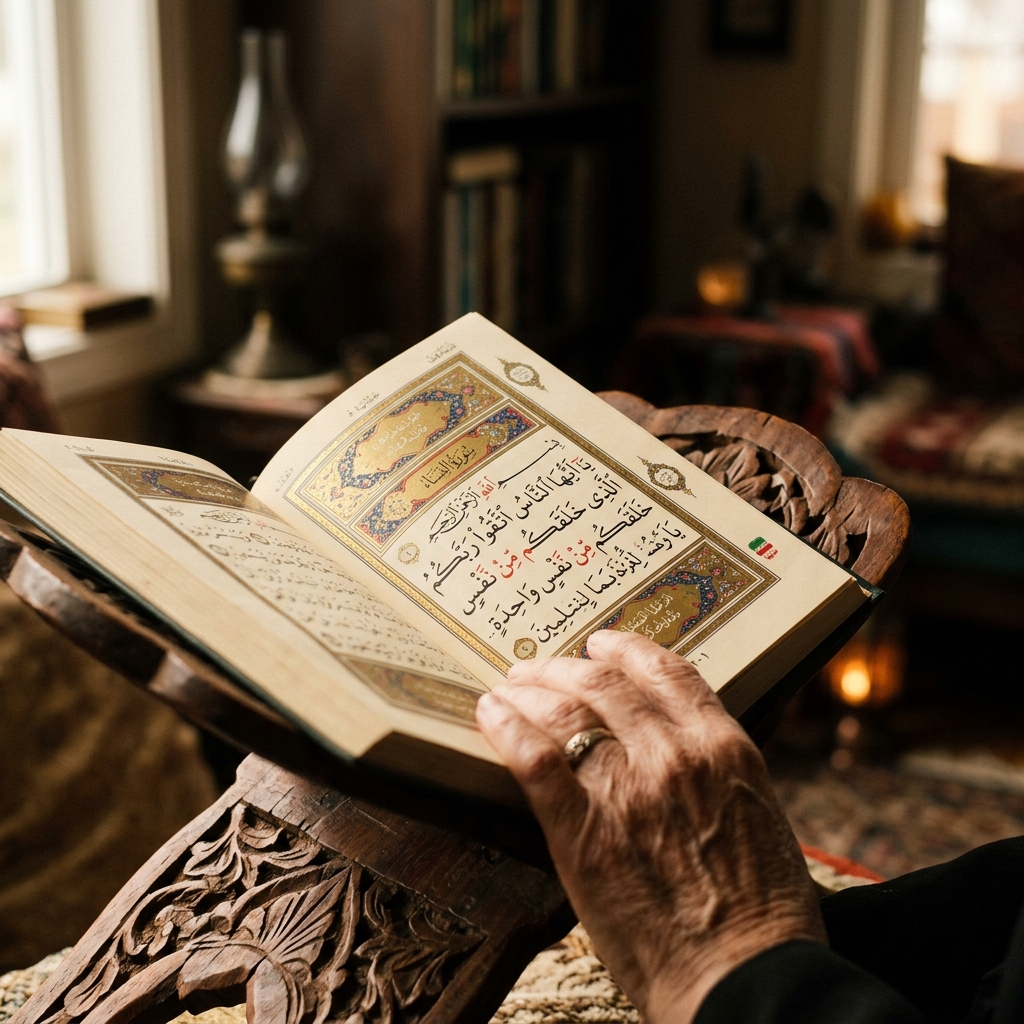
[!NOTE] Quick Summary: Basic errors like changing letter sounds (e.g. confusing ‘Haa’ with ‘haa’) and stretching short vowels incorrectly can change the meaning of the Quranic text. Practicing daily and getting feedback from a qualified teacher are the fastest ways to improve.
The Holy Quran is the literal word of Allah, and reciting it correctly with Tajweed is a spiritual duty for every Muslim. Minor pronunciation slips can sometimes entirely alter the meaning of the verses. Here, we outline the 5 most common recitation mistakes and practical tips to avoid them.
1. Confusing Similar-Sounding Letters (Wrong Makhraj)
The most frequent error is mispronouncing Arabic letters by using their English or Bengali close equivalents instead of the correct articulation point (Makhraj).
- ح (Haa) vs. ه (haa): For example, in ‘Alhamdulillah’ (الحمد), the word begins with ‘ح’ (deep throat H). Pronouncing it as a light ‘ه’ (chest H) changes the meaning.
- ع (Ayn) vs. أ (Hamzah): For example, pronouncing ‘Alameen’ (العالمين - worlds) as ‘Alameen’ (الألمين - painful).
How to Fix: Spend 5 minutes daily listening to a professional Qari and repeating individual letters.
2. Incorrect Madd (Stretching Vowels)
Madd rules dictate exactly how long a vowel should be stretched. Common mistakes include stretching where there is no stretching sign, or failing to stretch where required.
- Stretching Short Vowels (Harakat): Accidentally stretching a Fathah, Kasrah, or Dammah so it sounds like a long vowel.
- Skipping Long Vowels: Rushing over letters that require 1 or more counts of stretching.
How to Fix: Keep a basic Tajweed rule card nearby and remember the three Madd letters (Alif, Waw, Ya).
3. Not Performing Ghunnah Properly
Ghunnah (nasalization) adds beauty and grammatical correctness to the recitation.
- Skipping the required nasalization on Shaddah keys (like Inna or Thumma).
- Pressing the tongue flat against the palate during Ikhfa (the tongue should remain suspended near the articulation point of the next letter).
4. Incorrect Stopping (Waqf)
Stopping mid-verse because you run out of breath without looking at the punctuation marks can disrupt the meaning.
- Wrong Waqf: Stopping on a word that is grammatically bound to the next word.
- How to Fix: If you run out of breath and stop, backtrack 1 or 2 words to restore context before resuming your recitation.
5. Learning Without a Qualified Teacher
You cannot master Quran recitation solely by reading translation books or Romanized transliterations. It is an oral tradition passed down through auditory practice and direct feedback.
“The best among you are those who learn the Quran and teach it.”
— Sahih al-Bukhari, Hadith 5027
Ready to Correct Your Recitation?
Join the structured courses at An-Nisa University. Our certified female instructors help sisters and children master Tajweed and correct their recitation step-by-step from the comfort of their homes.
Frequently Asked Questions (FAQ)
Q: Is it a sin to read Quran without Tajweed?
Reciting the Quran with correct pronunciation is mandatory. While minor mistakes during the learning phase are forgiven by Allah, intentional negligence of basic rules is discouraged.
Q: How long does it take to learn Tajweed rules?
With consistent practice of 15-20 minutes daily under a qualified teacher, basic rules can be mastered in 1 to 3 months.
Recommended Reading

Seeking Islamic Knowledge While Managing a Busy Household
Practical tips for Muslim sisters and mothers to balance family duties while learning the …
Read More
The Scholarly Legacy of Aisha (RA): Inspiration for Muslim Women
How Mother of the Believers, Aisha (RA), became one of the greatest jurists and scholars …
Read More